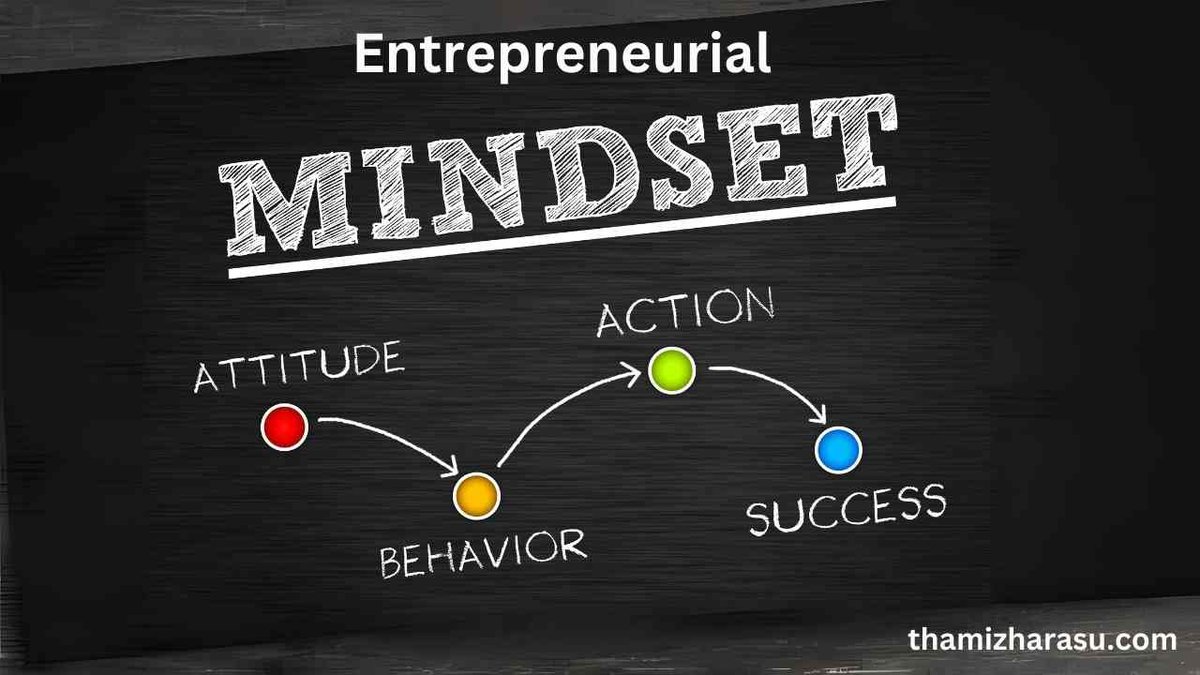
In a world reshaped daily by technological leaps and unexpected challenges, merely adapting isn't enough. Thriving demands a specific way of thinking – one that sees the future not as an inevitability, but as a canvas for creation. This is the essence of an Innovation & Entrepreneurial Mindset, a powerful framework that equips individuals and organizations to not just navigate change, but to actively drive it, spotting opportunities where others see only roadblocks. It's about cultivating a perspective that transforms uncertainty into a catalyst for progress, making you more resilient, more resourceful, and ultimately, more successful in any endeavor.
At a Glance: What You'll Learn
- Define the Entrepreneurial Mindset: Understand its core components and why it’s critical today.
- Mindset Matters: See how an entrepreneurial approach differs from traditional thinking.
- 10 Practical Steps: Discover actionable strategies and challenges to cultivate your own innovative spirit.
- Beyond Business: Explore how this mindset enriches personal growth and leadership.
- Real-World Inspiration: Learn from the journeys of James Dyson, Oprah Winfrey, and Richard Branson.
- Tools for Growth: Identify resources to continuously sharpen your entrepreneurial edge.
The Seed of Opportunity: What Defines an Entrepreneurial Mindset?
At its heart, an entrepreneurial mindset is a dynamic collection of attitudes, skills, and behaviors that ignite innovation, creativity, and sustainable growth. It’s an internal compass that always points toward opportunity, even amidst chaos. Instead of being paralyzed by obstacles, those with this mindset are driven to find novel solutions and pathways forward. This isn't just for startup founders; it's a vital asset for anyone seeking to make an impact, whether in a large corporation, a community initiative, or their personal life.
Research consistently shows that adopting this perspective leads to higher self-efficacy, a sharpened ability to recognize opportunities, and a greater propensity for innovative behavior. It’s a profound shift in how you engage with the world.
Seven core factors consistently stand out in defining this powerful mindset:
- Vision: The ability to imagine a future state, often one that doesn't yet exist, and articulate a path to get there. It's seeing beyond the immediate horizon.
- Initiative: The drive to act, to start things, and to take responsibility for moving projects forward without waiting for permission. It's about being a doer.
- Resilience: The capacity to bounce back from setbacks, learn from failure, and persist in the face of adversity. It's the refusal to be defeated by challenges.
- Adaptability: The flexibility to adjust plans, strategies, and even core assumptions when new information or circumstances arise. It's about being agile, not rigid.
- Risk Tolerance: Not recklessness, but a willingness to embrace calculated risks, understanding that progress often requires stepping into the unknown.
- Curiosity: An insatiable desire to learn, explore, and ask "why" and "what if." It fuels continuous improvement and discovery.
- Problem-solving Orientation: A proactive approach to identifying challenges and creatively devising effective, often unconventional, solutions. It's about finding the "how."
Seeing the World Differently: Entrepreneurial vs. Traditional Thinking
To truly grasp the power of an entrepreneurial mindset, it helps to contrast it with a more traditional employee mindset. While both have their place, understanding the distinctions highlights why one is geared for breakthrough and the other for stability within existing frameworks.
- Risk Perception: An entrepreneur views risk as a potential pathway to significant opportunity, something to be assessed and leveraged. A traditional employee, conversely, often seeks to minimize or avoid risk, preferring predictability.
- Decision-Making: Entrepreneurs are typically autonomous and driven by initiative, empowered to make quick decisions and pivot. Employees often follow established procedures, relying on hierarchical approval.
- Problem-Solving: When faced with an issue, an entrepreneurial mind seeks creative, often innovative, solutions from first principles. A traditional approach tends to rely on existing systems, protocols, or historical precedents.
- Growth Focus: Continuous learning, skill development, and adaptation are hallmarks of the entrepreneurial journey. Employees often focus on deepening job-specific skills within their defined role.
- Reward Orientation: The entrepreneurial vision is often long-term, embracing delayed gratification for a larger future payoff. Employees typically seek immediate rewards, such as a regular paycheck and defined benefits.
- Ownership: An entrepreneur takes profound ownership of outcomes, seeing success and failure as direct reflections of their responsibility. Employees follow assigned tasks, with accountability often distributed across a team or hierarchy.
- Change: Change is not just tolerated but actively embraced by entrepreneurs as a fundamental driver of growth and new possibilities. Employees, while not always resistant, may prefer stability and find change disruptive to established routines.
This isn't about one mindset being inherently "better" than the other, but recognizing that each serves different goals. In today's dynamic landscape, however, incorporating entrepreneurial principles into any role can unlock immense potential.
Forging the Future: 10 Actionable Tips to Develop an Entrepreneurial Mindset
Developing an entrepreneurial mindset isn't a passive process; it's an active journey of cultivation. Here are 10 practical strategies, each accompanied by tangible actions and a challenge to put theory into practice.
1. Practice Opportunity Recognition
The world is overflowing with problems, inefficiencies, and unmet needs – each a potential opportunity in disguise. Training your brain to spot these is fundamental.
- Actions: Regularly engage in "problem hunting." Look at daily inconveniences, frustrations, or areas where things could be better. Practice active listening when others complain, not just to empathize, but to identify underlying needs.
- Challenge: For one week, embrace the "Five Problems Challenge." Each day, list five problems or inconveniences you observe around you (at home, work, commuting, etc.). By the week's end, you'll have 35 observations. Pick three that resonate most, brainstorm potential solutions, and then conduct quick online research to see if a viable business opportunity exists around any of them.
2. Develop a Customer-Centric Mindset
At the core of any successful venture is a deep understanding and relentless focus on the customer. This isn't just good service; it's a foundational perspective.
- Actions: Practice empathy by actively trying to understand your customers' struggles, aspirations, and daily realities. Systematically gather feedback through surveys, interviews, and direct observation. Map the customer journey to identify pain points and moments of delight. Personalize experiences where possible, and strive to anticipate their needs before they even voice them.
- Challenge: Live a day as one of your target customers. If you sell software to small businesses, spend a day managing one. If you create educational content for parents, follow a parent's routine. Experience your product or service from their perspective, noting every interaction, frustration, and moment of satisfaction.
3. Build a Diverse Network
Your "net worth" often correlates with your network. Surrounding yourself with diverse perspectives, skills, and experiences acts as a personal "board of advisors."
- Actions: Actively identify skill or knowledge gaps you have and seek out individuals who can fill those. Attend diverse events – not just in your industry. Leverage online platforms like LinkedIn for targeted connections. Always offer value before asking for it, follow up genuinely, and consistently nurture these relationships.
- Challenge (4 weeks):
- Week 1: Reach out to an admired industry contact you haven't spoken to in a while, or a new one you've wanted to connect with.
- Week 2: Attend an event or webinar outside your usual professional circle.
- Week 3: Join an online community or forum dedicated to a skill you want to develop.
- Week 4: Reconnect with three people in your existing network, not for a specific ask, but simply to check in and strengthen the relationship.
To really accelerate your development, you might also consider what the Next Generation Academy offers in terms of networking and skill-building opportunities.
4. Embrace Curiosity and Continuous Learning
An entrepreneurial mind is insatiably curious, always seeking new knowledge and understanding. It’s the engine of innovation.
- Actions: Diversify your information sources: read books from different genres, listen to varied podcasts, attend workshops on unrelated topics. Dedicate time each day to deliberate learning, even if it's just 15 minutes. Keep a "curiosity journal" to jot down questions, interesting facts, and new ideas. Actively seek out cross-disciplinary knowledge, as many breakthroughs happen at the intersection of fields. Learn from perspectives that challenge your own.
- Challenge: For one month, consciously spend 30 minutes each day exploring a topic completely unrelated to your work or current interests. This could be astrophysics, ancient history, modern art, or advanced cooking techniques. Notice how this broadens your thinking and potentially sparks new connections.
5. Reframe Failure as Feedback
The fear of failure can be paralyzing. Entrepreneurs don’t avoid failure; they extract its lessons. Shift your mental association of "failure" to "information," "learning," or "growth."
- Action: Identify a recent instance you might label a "failure" (a project that didn't meet expectations, a missed deadline, a rejected pitch). List three specific, objective learnings from that experience. Then, identify how you can apply those learnings to a future situation. Finally, rename the "failure" based on the lesson learned, e.g., "Lesson in Customer Needs from Project X" or "Insight into Market Timing from Initiative Y."
6. Cultivate a Growth Mindset
Inspired by Carol Dweck's groundbreaking research, a growth mindset is the belief that your abilities and intelligence can be developed through dedication and hard work. It's the antithesis of a fixed mindset, which assumes abilities are static.
- Actions: Consciously embrace challenges rather than shying away from them. Value the effort you put in over innate talent. Actively seek and learn from criticism, viewing it as a pathway to improvement. Find inspiration and lessons in others’ success, rather than seeing it as a threat.
- Action: For one month, identify a specific area where you typically hold a fixed mindset (e.g., "I'm just not good at public speaking" or "I can't grasp complex financial concepts"). Intentionally approach this area with a growth mindset, putting in extra effort, seeking resources, and practicing. Journal your progress and observations.
7. Embrace Calculated Risk-Taking
Entrepreneurs are not gamblers; they are calculated risk-takers. This means weighing potential outcomes, preparing for various scenarios, and making informed decisions rather than simply avoiding uncertainty.
- Framework:
- Assess Potential Reward: What's the best-case scenario if this risk pays off? Be specific.
- Evaluate Potential Downside: What's the worst-case scenario? What would be the true cost (financial, reputational, time)?
- Calculate the Odds: Based on available information, what's your best estimate of the probability of success? (e.g., 60% success, 40% failure).
- Prepare for Multiple Outcomes: Develop contingency plans for the downside. How can you mitigate the negative impacts?
- Start Small: Can you test the waters with a smaller, less risky version of the action?
- Action: Identify a calculated risk you're currently hesitant to take (e.g., pitching a new product idea, asking for a promotion, starting a side project). Apply the framework above: analyze the potential reward, evaluate the potential downside, estimate the odds (e.g., 60% success, 40% failure), and brainstorm mitigation strategies (e.g., launch a small batch, gather early feedback, create a simple marketing plan).
8. Cultivate Creativity and Innovation
Innovation is about seeing opportunities others miss and solving problems in unique ways. Creativity is the fuel for innovation.
- Strategies: Practice divergent thinking – generating as many ideas as possible without judgment. A classic exercise is the "30 Circles Challenge": in 3 minutes, turn 30 blank circles into identifiable objects. Embrace constraints, as they often force creative solutions. Cross-pollinate ideas by looking at how other industries or fields solve similar problems. Use mind mapping to visually connect ideas. Implement a "Crazy Idea Hour" where you dedicate time to brainstorming seemingly outlandish ideas, suspending all judgment.
- Action: Implement a daily creativity exercise for at least 10 minutes. This could be free writing, sketching, using a creativity prompt app, or simply observing something familiar and trying to describe it in five completely new ways.
9. Develop Emotional Intelligence (EQ)
Often overlooked in the pursuit of entrepreneurial success, emotional intelligence (EQ) is critical for effective leadership, negotiation, and building strong teams. It encompasses self-awareness, self-regulation, motivation, empathy, and social skills.
- Actions for Components:
- Self-Awareness: Practice mindfulness and keep an emotion journal to understand your triggers and reactions.
- Self-Regulation: When triggered, practice the "pause-breathe-respond" technique. Set clear personal and professional standards.
- Motivation: Define your core values and align your actions with them. Celebrate small wins to maintain momentum.
- Empathy: Practice active listening, truly hearing what others say without formulating your response. Try to take others' perspectives, imagining their experiences.
- Social Skills: Consciously practice clear, concise communication. Pay attention to non-verbal cues in interactions.
- EQ Challenge (4 weeks):
- Week 1: Reflect daily on the emotions you experienced and what might have triggered them.
- Week 2: Identify a recurring triggering situation and plan a calm, constructive response in advance.
- Week 3: During conversations, consciously try to identify the emotions behind others' words, not just the words themselves.
- Week 4: Practice giving constructive feedback to someone, focusing on impact and solutions rather than blame.
10. Embrace Adaptability and Resilience
The entrepreneurial journey is rarely linear. Being flexible in your thinking and actions, and possessing the ability to bounce back from setbacks, is paramount.
- Strategies: Practice scenario planning: "What if X happens? How would I respond?" Actively embrace change by seeking new tools, methods, or perspectives. Build a robust support network of mentors, peers, and friends. Prioritize your physical and mental health, as these are your foundational resources. When setbacks occur, conduct a "post-mortem" analysis: What went wrong? What did we learn? How can we improve?
- Action: Intentionally change one small aspect of your daily routine for a week. This could be taking a different route to work, using a new tool for a familiar task, or approaching a routine responsibility in a completely novel way. Reflect on its impact on your thinking, problem-solving, and adaptability.
Beyond the Bottom Line: The Wider Impact of an Entrepreneurial Mindset
While often associated with business ventures, an entrepreneurial mindset offers profound benefits that extend far beyond financial success. It fosters significant personal growth, honing your ability to lead, influence, and inspire, regardless of your formal title.
This internal shift in perspective allows you to see the world through a lens of possibility, resilience, and perpetual innovation. It means:
- Enhanced Leadership Skills: You become more proactive, solution-oriented, and capable of motivating others through uncertainty.
- Greater Problem-Solving Acumen: You're not just finding answers; you're discovering entirely new questions and frameworks for tackling complex issues.
- Higher Life Satisfaction: By taking ownership of your path, learning from challenges, and constantly evolving, you cultivate a deeper sense of purpose and achievement.
- Improved Well-being: The ability to adapt, manage stress creatively, and maintain a forward-looking perspective can significantly boost mental fortitude and overall happiness.
It’s about recognizing that you have the agency to shape your circumstances, rather than simply reacting to them.
Masterclass in Mindset: Real-World Case Studies
Learning from those who embody the entrepreneurial spirit can be incredibly inspiring. These individuals faced daunting challenges and, through sheer force of mindset, transformed their visions into reality.
- James Dyson: The Relentless Innovator. Dyson famously created 5,126 failed prototypes over 15 years while developing his revolutionary bagless vacuum cleaner. His journey is a testament to unwavering persistence, a profound commitment to learning from every "failure" (which he viewed as feedback), and an engineering excellence that ultimately disrupted an entire industry. His story epitomizes resilience and a problem-solving orientation that refuses to give up.
- Oprah Winfrey: The Power of Authenticity and Empathy. Oprah’s rise from a challenging childhood to building a global media empire is a masterclass in emotional intelligence and vision. Her success wasn't just about business acumen; it was about her unparalleled ability to connect authentically with her audience, understand their needs, and build a platform that resonated deeply. Her journey highlights how empathy and self-awareness can forge genuine connections that translate into monumental impact.
- Richard Branson: The Calculated Risk-Taker and Diversifier. Branson built the Virgin Group, a global empire of over 400 companies spanning music, airlines, telecoms, and even space travel. His journey showcases a remarkable knack for diversification, a fearless embrace of calculated risk-taking, and an incredibly adaptable approach. Branson's ability to spot opportunities across vastly different industries, coupled with a strong, adventurous brand identity, demonstrates the power of vision and initiative.
These stories aren't just about grand achievements; they are about the underlying mindset that fueled every step of their extraordinary journeys.
Sharpening Your Edge: Tools and Resources
Cultivating an entrepreneurial mindset is a continuous journey. Fortunately, a wealth of resources exists to support your growth.
Books to Ignite Your Thinking
- "The Lean Startup" by Eric Ries: Essential for understanding agile product development and validating ideas with minimal resources.
- "Good to Great" by Jim Collins: Explores how companies make the leap from good results to sustained greatness, often through disciplined entrepreneurial principles.
- "The E-Myth Revisited" by Michael E. Gerber: A foundational text for aspiring small business owners, emphasizing working on your business, not just in it.
- "Steve Jobs" by Walter Isaacson: A deep dive into the visionary mind and relentless drive behind Apple's co-founder.
- "Shoe Dog" by Phil Knight: The memoir of the Nike founder, offering raw insights into the grit, setbacks, and triumphs of building an iconic brand.
- "Mindset: The New Psychology of Success" by Carol Dweck: The definitive guide to understanding and cultivating a growth mindset.
Online Courses and Workshops
Platforms like Coursera, Udemy, Skillshare, and MasterClass offer structured learning paths in everything from design thinking and market validation to financial modeling and leadership development. Look for courses taught by actual entrepreneurs or industry leaders for the most practical insights.
Mentors and Role Models
Finding individuals who have walked a similar path can provide invaluable guidance, advice, and help you sidestep common pitfalls. Seek out mentors through networking, professional organizations, or even by reaching out to people you admire on platforms like LinkedIn. Remember to approach these relationships with respect for their time and an attitude of learning.
Entrepreneurial Communities and Groups
Networking groups, local incubators, accelerators, and online forums offer camaraderie, mutual support, and a space for problem-solving and brainstorming with like-minded individuals. These communities can be vital for emotional support, practical advice, and opening doors to new collaborations.
The Journey Forward: Embracing Your Entrepreneurial Self
Developing an entrepreneurial mindset is less about a single destination and more about a continuous evolution. It requires consistent effort, deep self-reflection, and a courageous willingness to step out of your comfort zone, time and time again.
This mindset equips you not just to navigate the complexities of modern life and business, but to actively shape them. It empowers you to mitigate risks, seize opportunities that others overlook, and embrace every twist and turn of the journey as a contribution to your personal and professional growth.
The world needs more innovators, more problem-solvers, and more visionaries. By cultivating your entrepreneurial spirit, you're not just building a better future for yourself; you're contributing to a more dynamic, resilient, and opportunity-rich world for everyone. The journey starts now, with a single shift in perspective, and the courage to act.